
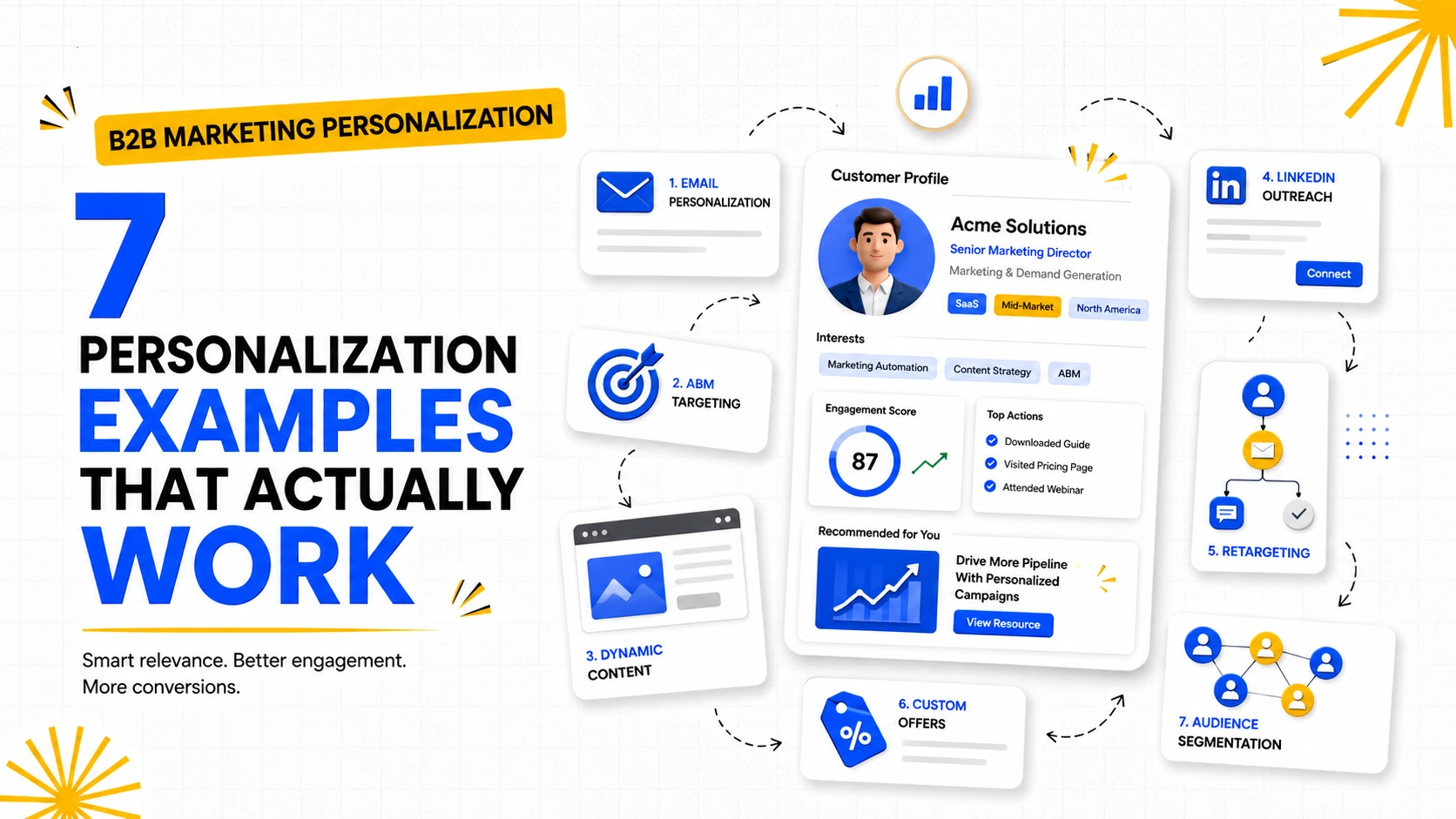
B2B Marketing Personalization
Modern B2B buyers no longer respond well to generic marketing messages. They want brands to understand their business challenges, industry needs, and goals before offering solutions. This is where B2B Marketing Personalization helps companies create meaningful experiences by delivering relevant content, communication, and offers to the right audience at the right time.
In today’s competitive digital environment, businesses need more than traffic and leads. They need qualified conversations with potential customers who trust their expertise. A personalized approach helps companies build stronger relationships, improve engagement, and guide prospects through the buying journey more effectively.
Whether you are a SaaS company, manufacturer, service provider, or consulting business, personalization can help you connect with decision-makers in a more valuable way. This blog explains practical examples, strategies, and best practices that businesses can use to improve their marketing performance.
What Is B2B Marketing Personalization?
B2B Marketing Personalization is the process of creating customized marketing experiences based on a company’s industry, customer needs, business challenges, online behavior, and buying stage. Instead of sending the same message to every prospect, businesses create communication that feels more relevant and useful for specific audiences.
In B2B markets, purchasing decisions are usually complex. Multiple people may influence the final decision, including business owners, managers, technical teams, and finance professionals. Because of this, businesses need to understand different audience segments and create content that addresses their unique concerns.
For example, a manufacturing company searching for digital marketing services may need information about industrial lead generation, while a software company may need content about SaaS customer acquisition. A personalized approach ensures both audiences receive information connected to their actual requirements.
Why B2B Marketing Personalization Matters for Business Growth
B2B buyers now complete significant research before contacting a sales team. They compare solutions, read industry content, check case studies, and evaluate expertise online. Companies that provide relevant information during this research phase have a better chance of building trust.
B2B Marketing Personalization allows businesses to move away from mass communication and focus on meaningful interactions. When prospects see content that understands their problems, they are more likely to engage with the brand and consider its solutions.
Personalized marketing also supports long-term relationship building because customers feel that a company understands their business instead of simply trying to sell a product or service.
Businesses can improve results by focusing on:
- Better audience understanding
- More relevant content
- Higher-quality leads
- Stronger customer relationships
7 B2B Marketing Personalization Examples That Actually Work
1. Personalized Website Experiences Based on Visitor Intent
A website is often the first interaction between a business and a potential customer. Creating personalized website experiences helps visitors quickly find information that matches their interests and challenges.
Instead of showing the same message to every visitor, companies can create industry-specific landing pages, customized service pages, and targeted content sections. For example, a marketing agency serving manufacturers can create separate pages for textile companies, engineering businesses, and industrial suppliers.
This approach improves user experience because visitors spend less time searching for relevant information. It also increases the possibility of converting website visitors into qualified inquiries.
2. Industry-Specific Content Marketing
Content marketing becomes more effective when it focuses on specific audience needs. Generic articles may attract visitors, but industry-focused content helps demonstrate expertise and authority.
Businesses can create resources that answer real questions faced by their target customers. A logistics company may publish content about supply chain challenges, while a technology provider may share guides about digital transformation.
Creating specialized content also strengthens E-E-A-T signals because it shows practical knowledge and understanding of the audience’s industry.
Companies should focus on creating:
- Industry guides
- Customer success stories
- Educational resources
- Problem-solving content
These resources help prospects understand solutions before they are ready to make a purchase decision.
3. Personalized Email Marketing Campaigns
Email marketing becomes more powerful when businesses send messages based on customer interests instead of sending the same email to everyone.
Effective email campaigns consider factors such as previous website visits, downloaded resources, company type, and customer journey stage. A prospect who downloaded a marketing guide may need educational content, while someone requesting pricing information may require a sales-focused follow-up.
Personalized emails help businesses nurture relationships over time. They keep prospects engaged and provide useful information until they are ready to speak with a sales team.
4. Account Based Marketing Personalization
Account Based Marketing Personalization focuses on creating customized campaigns for specific high-value companies. Instead of targeting a broad audience, businesses identify important accounts and create marketing experiences designed for those organizations.
This strategy is commonly used by companies with longer sales cycles and higher-value products or services.
For example, a software provider targeting large manufacturing companies can create content focused on manufacturing automation challenges, industry regulations, and operational improvements.
Account-based approaches combine marketing and sales efforts to create a more focused customer acquisition process.
5. Personalized LinkedIn Marketing and Outreach
LinkedIn is an important platform for B2B businesses because decision-makers actively use it for networking, research, and professional learning.
Successful LinkedIn outreach is based on understanding the prospect before starting a conversation. Businesses should focus on sharing valuable insights, commenting on relevant discussions, and creating meaningful connections.
A personalized LinkedIn message that refers to a prospect’s industry challenge will usually perform better than a generic sales message. The goal should be building credibility first and starting conversations naturally.
6. Personalized Solutions and Recommendations
B2B customers usually look for solutions that match their specific business requirements. Companies can improve customer experience by recommending services, products, or resources based on customer needs.
For example, a consulting company may recommend different growth strategies for startups, established companies, and enterprise organizations. A manufacturing supplier may highlight different solutions depending on production requirements.
This type of approach helps buyers feel understood and reduces confusion during the decision-making process.
7. Personalized Customer Journey and Follow-Ups
Personalization should continue throughout the entire customer journey. Many businesses focus only on attracting leads but ignore the importance of personalized follow-up communication.
A strong customer journey includes relevant communication at every stage. During the awareness stage, businesses can provide educational content. During the consideration stage, they can share case studies and comparisons. During the decision stage, they can provide customized proposals.
Consistent and helpful communication builds trust and increases the chances of converting prospects into customers.
How to Create an Effective B2B Marketing Personalization Strategy
Understand Your Target Audience
The first step is understanding who your customers are and what problems they are trying to solve. Businesses should create clear buyer personas that include industry type, business goals, challenges, and decision-making factors.
Customer understanding helps marketers create messages that feel relevant instead of promotional.
Collect and Analyze Customer Data
Successful personalization depends on accurate customer information. Businesses can use website analytics, CRM systems, customer feedback, and marketing performance data to understand audience behavior.
However, data should always be collected and used responsibly. The goal is to improve customer experience, not create unnecessary communication.
Create Valuable and Relevant Content
Content should match the customer’s needs at different stages of the buying journey. Educational content helps attract new audiences, while detailed resources help existing prospects evaluate solutions.
Companies that consistently provide useful information build stronger authority and trust within their market.
Measure Results and Improve Campaigns
A personalization strategy should be continuously improved through performance tracking. Businesses should analyze engagement, conversions, lead quality, and sales results.
Testing different messages, content formats, and audience segments helps identify what works best for achieving business goals.
Common Mistakes Businesses Make With Personalization
Many companies misunderstand personalization and only use basic methods like adding a customer’s name in an email. True personalization requires understanding customer needs and creating relevant experiences.
Another common mistake is collecting customer data but not using it effectively. Data becomes valuable only when businesses use insights to improve communication and customer experience.
Companies should also avoid making personalization unnecessarily complicated. Starting with simple improvements and gradually expanding is often the most practical approach.
Tools That Support Personalized B2B Marketing
Businesses can use different technology solutions to improve personalization efforts. Customer relationship management platforms help organize customer information, marketing automation tools support targeted campaigns, and analytics platforms provide insights into user behavior.
Artificial intelligence is also becoming useful for analyzing customer patterns, improving content recommendations, and helping marketers create more efficient workflows.
The right tools depend on business size, marketing goals, and customer journey complexity.
Final Thoughts: Building Better Customer Connections Through Personalization
Modern B2B marketing is no longer about reaching the largest audience possible. It is about reaching the right audience with meaningful information at the right moment.
A strong B2B Marketing Personalization approach helps businesses understand their customers, create valuable experiences, and build long-term relationships. Companies that combine customer insights, useful content, and effective technology can improve marketing performance and generate stronger business opportunities.
The best way to start is by reviewing your current customer journey and identifying areas where more relevant communication can create better engagement and results.
FAQs
B2B Marketing Personalization means creating customized marketing experiences based on customer information such as industry, business needs, behavior, and buying stage. It helps companies deliver more relevant communication instead of generic messages.
Examples include personalized emails, industry-focused content, customized website experiences, account-based campaigns, and targeted LinkedIn communication.
Personalized marketing attracts prospects who are more likely to need a company’s solution. By addressing specific challenges, businesses can improve lead quality and increase conversion opportunities.

